





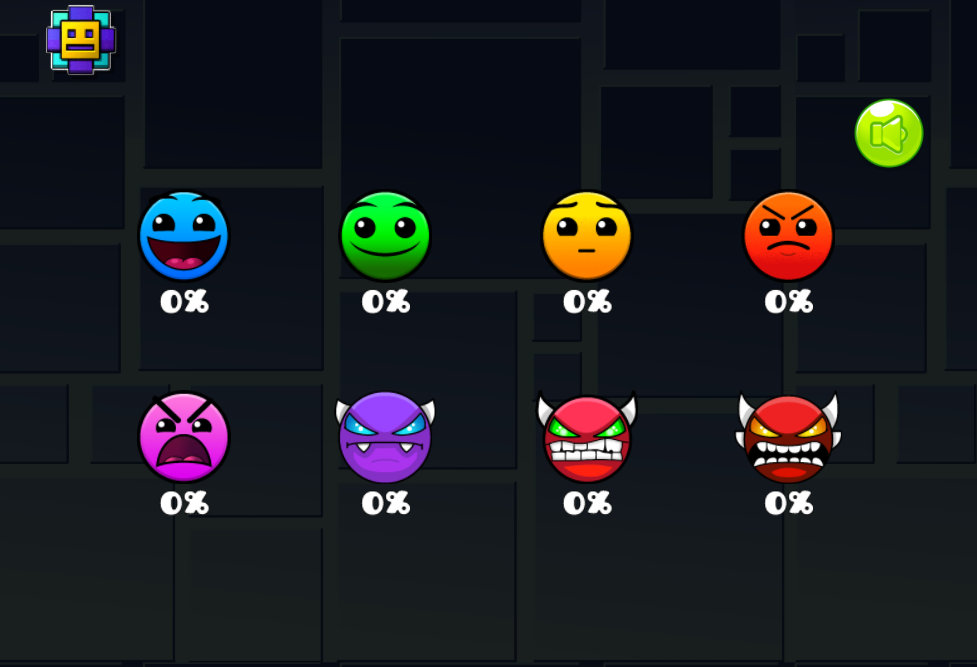
Geometry Dash Wave
Play Geometry Dash Wave online and control instant up-and-down movement through narrow corridors built around the demanding Wave form.
What to expect
A focused wave challenge where tiny timing changes decide whether you clear the corridor.
About Geometry Dash Wave
Geometry Dash Wave focuses on one movement form instead of switching between several vehicle styles. The wave travels diagonally through the corridor, rising while you hold the input and falling when you release. Because the change is immediate, the level becomes a test of controlled rhythm.
The narrow spaces make small mistakes visible. A correction that would be harmless in a wider section can become a wall hit a moment later.
Why the Wave Form Plays Differently From Cube or Ship
The Wave form does not give you the same cushion as a cube jump or ship glide. Its angle responds directly to the input, so there is little time to wait for momentum to settle. You need to think about the next line of the corridor while already controlling the current one.
That instant response is demanding but also useful. When a run fails, the input itself is usually clear: the hold lasted too long, the release came late, or the next turn was read too slowly.
How to Play Geometry Dash Wave
Use short, deliberate taps in sections that require frequent direction changes. Hold only when the corridor gives you room to climb or descend. Keep your eyes ahead of the wave so your next correction begins before the obstacle reaches you.
Practice a difficult passage by identifying its rhythm rather than reacting to every wall. Once the movement pattern becomes familiar, your hands can repeat it with less panic.
Corridor Design and Reading Ahead in Geometry Dash Wave
The corridor is the real opponent. Narrow gaps, mirrored turns, and sudden changes test whether you can read a few beats ahead. A safe route often depends on entering the next gap at the correct angle, not merely surviving the current opening.
Watch for visual landmarks that repeat across a section. Use them to predict when a hold should become a release. This turns an apparently chaotic passage into a sequence of manageable decisions.
Features of Geometry Dash Wave Game
- Wave-only movement with instant directional response.
- Narrow corridors that reward precision.
- Short retry loops for pattern practice.
- Visual hazards that make timing errors easy to diagnose.
- A focused challenge for players who enjoy high accuracy.
FAQs
Why do cube-player instincts fail here?
Cube movement usually allows a little more recovery after a late input. Wave movement changes direction immediately, so holding and releasing must be more exact.
Should I watch the wave or the corridor?
Keep the wave in peripheral vision and read the corridor ahead. Predicting the next opening is safer than reacting after it is already beside you.
How can I improve on a hard section?
Break its movement into a repeatable rhythm, then practice the same hold-and-release sequence until it no longer requires last-second reactions.
For a different precision obstacle course, see Short Life 2.