


Chicken Merge
Play Chicken Merge online, merge matching chickens, build a stronger battle line, and keep your base protected as enemy waves grow.
What to expect
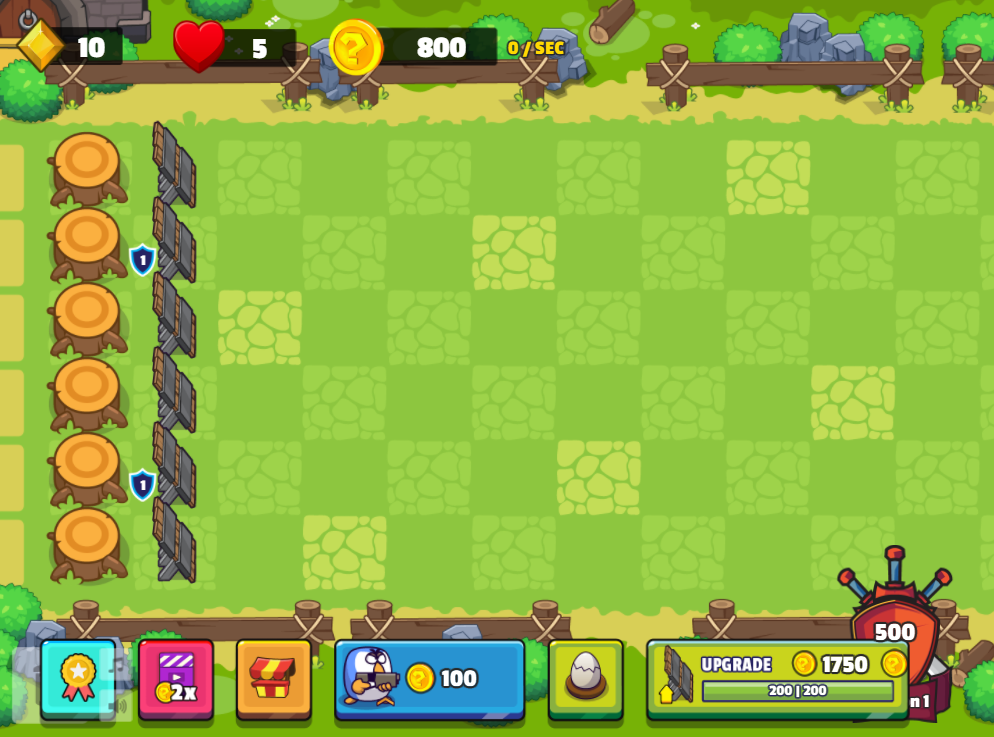
A merge-and-defense game where grid space and lane timing are equally important.
About Chicken Merge
Chicken Merge combines two familiar ideas: merge matching units to grow them, then place the stronger result where it can defend your base. The board gives you a space for growth and a separate battle line, so the best move is not always the biggest merge available.
Every wave asks you to balance preparation against immediate defense. A powerful chicken sitting in the growth area does nothing for the lane until you move it forward, but using every unit too early can leave no room for the next useful fusion.
How to Play Chicken Merge
Look for matching chickens and combine them before the growth area becomes crowded. After a merge, check the battle line and decide whether the new unit should move forward now or remain available for another combination.
Keep an eye on the next wave rather than spending all your attention on the current merge. A modest defender in the right lane can buy more time than a stronger unit placed where it cannot cover the approaching threat.
Reading the Difficulty Curve of Chicken Merge
The early waves give you room to learn the board, but later attacks make unused space expensive. As pressure rises, you need faster decisions about whether to merge, reposition, or fill a weak lane. A comfortable strategy at the beginning may fail simply because it leaves the battle line too thin during transitions.
Use the easier opening to establish a repeatable arrangement. Notice which lanes need coverage first and which chickens provide useful area support. Planning before the wave arrives is more reliable than trying to rebuild the entire board under pressure.
Features of Chicken Merge Game
- A growth field for buying and combining chickens.
- A defensive line where placed units attack automatically.
- Matching-unit merges that create visible progression.
- Waves that gradually increase placement pressure.
- Strategy based on space, timing, and lane coverage.
Advanced Techniques Beyond Basic Merging in Chicken Merge
Do not spread your strongest units evenly without checking their attack range. A central high-level chicken may support neighboring lanes more effectively than two weaker units placed at the edges. Keep at least one flexible space available so an unexpected purchase does not freeze the growth area.
During a difficult wave, stabilize the lane that is closest to failing before chasing an ideal merge. A slightly imperfect board that survives gives you another chance to combine; a perfect growth plan with no active defense ends the run.
FAQs
Should I merge every matching chicken immediately?
Not always. Merge when it improves your board without leaving the battle line exposed. Save a flexible unit when the next wave is close.
Why does the board feel crowded later?
The growth field has limited spaces, and larger waves require more purchases and defenders. Use merges to reclaim space and keep one slot available for recovery.
Where should I place a strong chicken?
A central position can be useful when its attack reaches nearby lanes. Check the unit’s actual coverage and the pressure on each side before committing.
For another game built around careful placement, visit The Choicer Voicer 2.